 A Printing United Alliance and FESPA Member
How Can A Prepress Technician Help Prevent Expensive Reprints?
- 22nd May 2026
- Prepress Services
- Alpha Prepress.
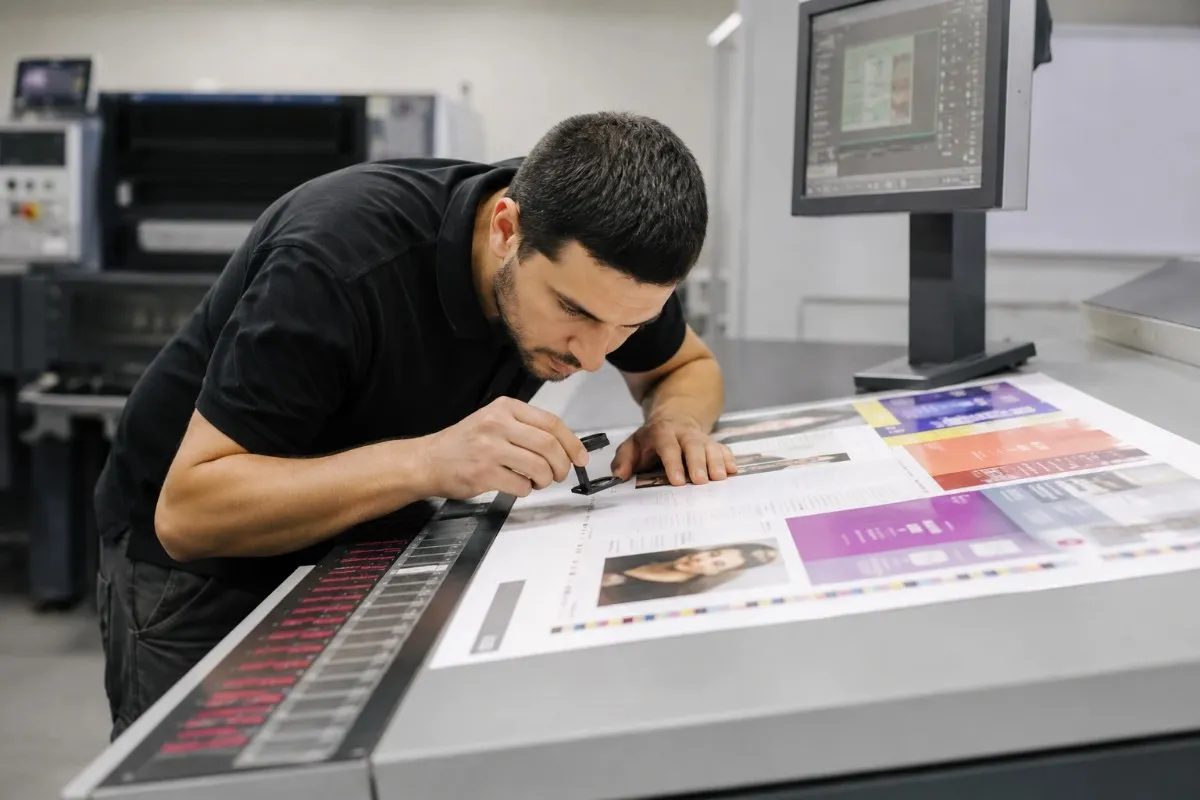
Every commercial printer understands the pressure attached to production deadlines, colour consistency, and client expectations. A single unnoticed issue in a print-ready file can disrupt schedules, waste materials, and lead to expensive reprints that affect both profitability and reputation. Even experienced production teams face recurring challenges when artwork arrives incomplete, incorrectly formatted, or unsuitable for the intended printing method.
A skilled prepress technician plays an essential role in ensuring print quality and reducing costs by identifying issues such as colour mismatches and trapping errors before files reach production.
Modern printing operations also handle an increasingly diverse range of projects, including signage, labels, retail packaging, catalogues, and large-scale graphics. Many printers rely on outsourced digital prepress services and overnight support to maintain consistency without expanding internal staffing. This growing demand also increases the need for accurate corrugated packaging prepress workflows that support structural precision, colour consistency, and reliable large-volume packaging production.
1. Hidden Costs Behind Reprints
Reprints rarely involve paper waste alone. They also affect labour allocation, machine availability, freight schedules, and customer relationships. When a print error reaches the press stage, production teams must pause active jobs, correct files, reorder materials, and absorb additional production expenses.
Many printing businesses underestimate how often preventable artwork issues, such as missing fonts, incorrect colour profiles, low-resolution graphics, and poorly prepared dielines, trigger production setbacks. Prepress teams identify these concerns early before they affect press performance or finishing accuracy.
Several recurring production issues frequently lead to unnecessary reruns:
- Incorrect bleed or trim settings
- RGB artwork submitted for CMYK printing
- Packaging files missing dieline separation
- Incorrect overprint settings on transparent objects
- Low-resolution graphics for large format output
A prepress technician can identify these production risks early, before they create expensive reruns or workflow delays. These issues may appear minor during file submission. However, they become expensive once printing begins on a commercial scale.
Outsourced prepress services provide an additional layer of technical oversight during busy production periods, helping to prevent workflow bottlenecks. This support helps printers maintain quality without overloading internal teams during peak workloads.
2. File Accuracy Before Production Begins
Successful print production depends heavily on file accuracy before plates, presses, or cutters become involved. A qualified prepress technician evaluates every file carefully to ensure compatibility with the intended printing process. This preparation stage reduces uncertainty throughout production while improving output consistency.
During file handovers among designers, agencies, and print coordinators, prepress operators verify file integrity, checking for missing images, transparency errors, and other issues, to prevent delays and waste. Early verification helps maintain smoother production workflows while reducing avoidable output errors.
A structured file verification process, including checks for resolution, colour profiles, and fonts, helps maintain production accuracy across commercial printing workflows.
| Prepress Review Area | Purpose |
|---|---|
| Resolution verification | Prevent blurry output |
| Colour profile inspection | Maintain colour consistency |
| Bleed and trim validation | Avoid cutting errors |
| Font and text review | Prevent missing characters |
| Overprint assessment | Eliminate transparency conflicts |
| Layer structure inspection | Improve production compatibility |
Commercial printers and prepress providers in the United States often follow production guidelines and best practices supported by PRINTING United Alliance to maintain accurate file preparation, colour management, and reliable print production standards. This verification process becomes especially important within packaging prepress services, where folds, varnishes, and dielines require precise alignment. Large format prepress projects also require careful preparation, as scaling issues become more noticeable at larger viewing sizes.
3. Colour Consistency Across Print Runs
Colour inconsistency remains one of the most common reasons clients reject finished print jobs. Even slight tonal differences between approved proofs and final production can trigger disputes, reruns, and financial losses. Maintaining colour accuracy across presses and substrates requires technical precision during prepress preparation.
A professional prepress technician manages colour expectations before production begins. They verify ICC profiles, inspect spot colour usage, and ensure black generation settings remain suitable for the chosen output method. These adjustments help maintain predictable results throughout commercial printing environments. Many commercial prepress workflows follow internationally recognised quality management practices aligned with ISO Standards to improve print consistency, colour accuracy, and production control across large-scale printing environments.
Brand colours may appear inconsistent across campaigns when artwork preparation lacks proper colour management. Packaging designs can also vary between production batches when unsupported colour profiles enter the workflow unnoticed. Signage graphics often lack visual uniformity across different substrates, and incorrect rich-black settings produce uneven output during commercial print runs.
Retail franchise campaigns regularly require identical promotional graphics across multiple store locations and printing batches. Even small colour variations across production runs can undermine brand consistency and lead to customer complaints. A skilled prepress technician carefully standardises colour preparation, ensuring repeat campaigns maintain a uniform appearance across different production timelines.
4. Packaging Artwork Requires Precision
Packaging production involves greater technical complexity than standard commercial printing. Cartons, flexible packaging, labels, and retail displays each contain structural requirements that demand precise artwork preparation. Minor alignment issues can affect folding accuracy, sealing performance, or shelf presentation once packaging reaches production.
A dedicated prepress technician ensures artwork aligns correctly with cutter guides, barcode positioning, and finishing layers. They also verify varnish placement, embossing separation, white-ink layers, and trapping specifications before files proceed to production.

A beverage packaging supplier may manage several flavour variations using nearly identical carton layouts during a product launch. If a barcode or nutrition panel shifts slightly during artwork preparation, entire packaging batches can become unusable after die-cutting and folding. Packaging prepress services help identify these positioning risks before files reach production equipment.
Effective packaging prepress workflows also support barcode verification, accurate dieline alignment, controlled print layer separation, and variable content management. A prepress technician helps reduce internal production pressure while improving overall file reliability across packaging environments.
5. Large Format Files Need Control
Large format printing introduces unique production challenges that smaller commercial jobs rarely encounter. File scaling, image resolution, substrate behaviour, and finishing tolerances all influence final output quality. Without careful preparation, these variables create visible defects that become expensive to correct after installation.
A skilled prepress technician carefully reviews large-format files before printing begins. They evaluate scaling accuracy, inspect raster image quality, verify cut-contour alignment, and ensure artwork dimensions meet installation requirements. This preparation reduces the risk of resizing errors during output.
Vehicle wrap projects regularly expose scaling issues that remain unnoticed on smaller digital proofs before production begins. A sponsor logo placed incorrectly near a panel edge may distort heavily once installers stretch the vinyl across curved surfaces. Large format prepress expert review panel overlaps and safe zones carefully before printing begins.
Large format prepress work supports retail graphics, vehicle wraps, exhibition displays, outdoor signage, building banners, and point-of-sale installations. Many signage providers rely on outsourced prepress support because project volumes fluctuate throughout the year. This flexibility helps businesses maintain consistent turnaround times during seasonal demand spikes.
6. Workflow Stability Improves Efficiency
Production efficiency depends heavily on workflow consistency. When print files arrive unprepared, internal teams spend valuable hours correcting artwork instead of managing output schedules or customer communication. Repetitive file correction slows production while increasing labour pressure across departments.
A dedicated prepress technician creates stability by standardising incoming artwork before it enters production. Files become easier to process, proof, archive, and reproduce across future campaigns. This consistency reduces production interruptions and improves scheduling reliability throughout the operation.
Reliable prepress solutions also support stronger operational forecasting. Production managers can allocate press time more accurately when fewer unexpected corrections appear during setup. Improved predictability helps reduce overtime costs, minimise idle machinery, and maintain delivery commitments.
Structured prepress support improves production approvals, reduces internal correction time, strengthens press utilisation, and lowers substrate wastage. Consistent file preparation also improves repeat-job accuracy while strengthening customer confidence through more reliable production outcomes.
7. Outsourced Prepress Supports Growth
Many commercial printing businesses experience fluctuating production volumes throughout the year. Seasonal campaigns, packaging launches, retail promotions, and event schedules often lead to sudden spikes in demand for artwork preparation. Maintaining sufficient in-house staffing for every workload increase becomes financially difficult.
Outsourced digital prepress services provide scalable production support without long-term staffing commitments. Prepress technicians assist with file preparation, proofing, packaging setup, and large format artwork management, while internal departments remain focused on production scheduling and client service.
This approach offers several operational advantages:
- Extended overnight workflow capacity
- Faster artwork turnaround
- Reduced recruitment pressure
- Lower overhead costs
- Access to specialised prepress expertise
Packaging prepress companies and commercial printers frequently use offshore support models because production rarely stops entirely. Twenty-four-hour workflow continuity helps businesses process jobs faster while maintaining technical consistency across multiple projects.
A reliable prepress technician also becomes familiar with recurring customer specifications over time. This familiarity improves accuracy and reduces repetitive communication during future projects. Strong long-term prepress partnerships often create measurable efficiency gains throughout the production lifecycle.
8. Conclusion
Preventing expensive reprints requires more than careful press operation alone. Most production failures originate earlier in the workflow due to incorrect artwork preparation, inconsistent colour management, missing technical checks, or overlooked formatting issues. A knowledgeable prepress technician helps identify these problems before they reach production, protecting profitability, scheduling stability, and customer relationships.
For commercial printers, signage providers, and packaging producers managing tight deadlines, reliable prepress support creates measurable operational value. Alpha Prepress delivers experienced prepress services tailored for commercial production environments, including packaging, signage, and large format workflows. Our prepress technician supports accurate, installation-ready artwork preparation, helping reduce costly reruns and production delays. Commercial printers seeking dependable overnight support can contact Alpha Prepress directly to request a quote and strengthen production efficiency without increasing internal workload.
9. Frequently Asked Questions
A prepress technician prepares artwork before printing begins. Their responsibilities include file checking, colour correction, bleed validation, trapping inspection, and ensuring production compatibility across different printing methods.
Prepress services reduce costly production errors before jobs reach the pressroom. They improve file accuracy, colour consistency, and overall workflow efficiency for commercial printing operations.
Digital prepress services identify artwork problems early during file preparation. This process prevents issues like missing fonts, incorrect colours, resolution failures, and trimming mistakes from reaching production.
Packaging manufacturers, label printers, food brands, cosmetic companies, and retail packaging suppliers benefit from packaging prepress services because packaging production requires precise structural accuracy.
Yes, outsourced large format prepress technicians regularly prepare files for banners, vehicle wraps, signage, and exhibition graphics. They ensure correct scaling, resolution quality, and installation compatibility.
Many print businesses outsource prepress work to reduce staffing pressure, maintain overnight workflows, improve turnaround speed, and access specialised technical expertise during busy production periods.