 A Printing United Alliance Member
What Happens When Prepress And Printing Are Not Properly Synced?
- 17th April 2026
- Prepress Services
- Alpha Prepress.
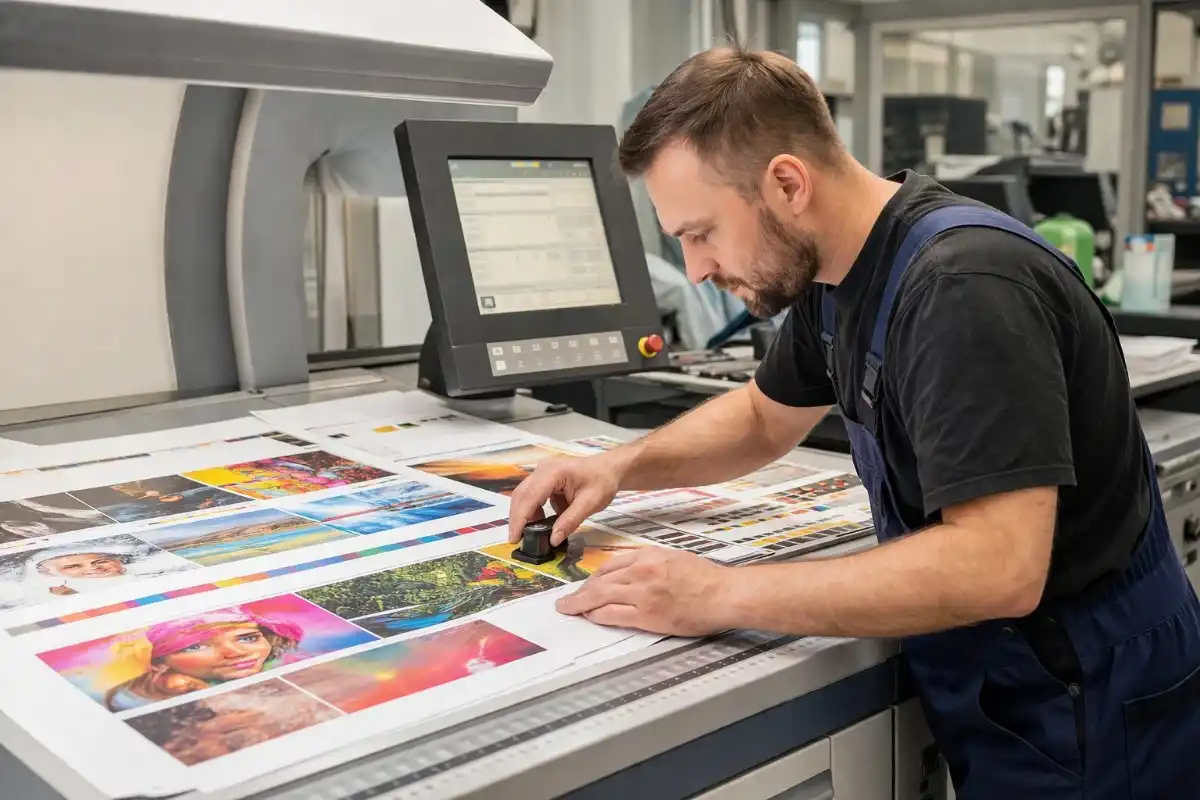
In commercial print production, breakdowns rarely begin in the press. They take shape earlier, often inside files that appear correct but carry unnoticed inconsistencies. When prepress and printing fall out of alignment, the impact builds and spreads across the entire production chain. Proper validation strengthens process control and reduces production risk.
At first, the signs seem manageable. A slight colour variation, a minor registration shift, or a proof that looks acceptable but behaves differently on press. For print businesses managing packaging, signage, or large format work, this disconnect between prepress and printing becomes operational rather than technical, directly affecting timelines, output consistency, and client trust.
1. Misaligned Files Disrupt Production Flow
Production flow depends on predictability. When files reach the press without proper validation, that predictability vanishes, leading to unexpected adjustments and delays that can compromise deadlines. Operators must correct density, adjust trapping, and fix overprint settings. These are not press faults but gaps in file preparation revealed under real conditions. What follows is a chain of unscheduled interruptions that affect multiple queued jobs.
In many setups, file preparation depends on press-specific requirements rather than generic specifications, creating a disconnect between file intent and machine behaviour that proper prepress validation helps resolve.
2. Colour Variations Undermine Output Consistency
Colour accuracy is often where misalignment becomes visible first. Files that appear correct on screen or proof may behave differently when transferred to the press. The outcome is not always dramatic, but it is noticeable enough to affect consistency.
In packaging environments, colour stability is tied directly to brand integrity. A slight shift in tone or density can disrupt shelf presence and trigger compliance concerns. Gradients, spot colours, and transparency elements are particularly sensitive to interpretation differences.
Common triggers behind these variations include:
- Misapplied or inconsistent ICC profiles during file preparation
- Lack of substrate-specific calibration before output
- Incorrect handling of overprint settings
- Variations between proofing and press conditions
Professional prepress solutions integrate colour management into the preparation stage, eliminating variation between approval and output. Businesses engaged in prepress and printing must follow established quality control standards to maintain output accuracy, minimise waste, and comply with industry requirements.
3. Press Interruptions Increase Production Costs
Not all downtime is equal. In print production, delays often manifest as mid-run recalibrations or machine idle time during corrections. These interruptions reduce throughput and increase operational pressure, especially during high-volume schedules.
Large format environments within production workflows feel this impact more sharply. Materials are expensive, and reruns are rarely convenient. When a file issue surfaces during production, the cost is immediate and often unrecoverable within tight timelines.
Below is how these disruptions typically translate into operational impact:
| Issue | Operational Impact |
|---|---|
| File inconsistencies | Mid-run recalibration delays |
| Colour instability | Reprints and substrate waste |
| Scaling mismatches | Job rejection |
Overprint misinterpretation can also lead to visible defects and output inconsistency. A structured prepress process serves as a production filter, ensuring files are stable before they reach the press and reducing the likelihood of costly interruptions.
4. Material Waste Escalates Quickly
A single failure rarely causes material waste. It builds through small oversights that only become visible during output. Once printing begins, teams often discard existing output to fix these issues.
In packaging and signage projects, this becomes a financial and environmental concern. Incorrect dielines, bleed inconsistencies, or resolution mismatches can render entire batches unusable. Over time, this translates into higher costs and reduced efficiency.
Waste typically increases due to:
- File dimensions that do not match production requirements
- Misaligned cut paths within packaging layouts
- Resolution inconsistencies in large format visuals
- Bleed and margin settings that fail under press conditions
A disciplined prepress process within production workflows prevents material waste by validating every element before production, providing control, and reducing the risk of costly delays and waste.
5. Workflow Gaps Introduce Hidden Risks
Fragmented workflows cause many production issues, not technical failure. When prepress &printing operate as separate functions without a shared reference point, small errors remain undetected until it is too late. Structured workflows improve process control and reduce production risk.
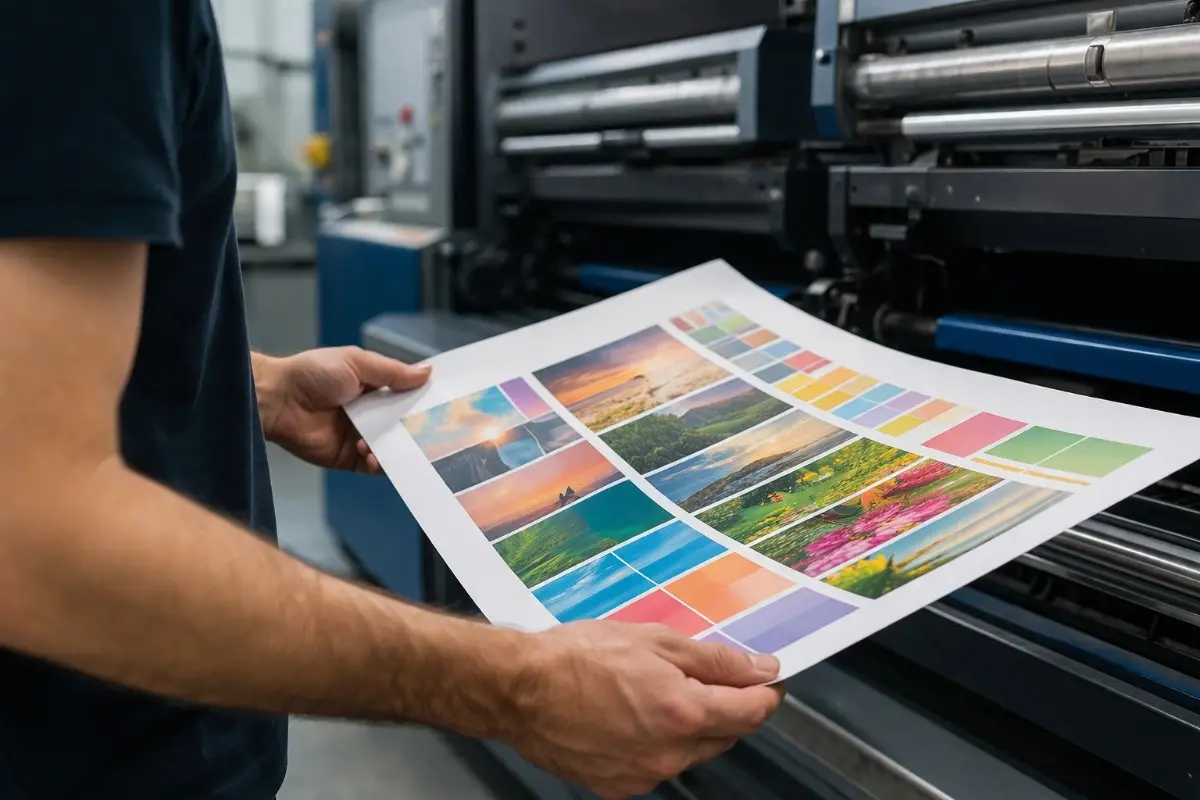
A file may meet design intent but fail under press constraints. Without a feedback loop that connects preparation and execution, these gaps persist across multiple jobs. Over time, they become embedded in the workflow.
Outsourced prepress services play a key role across prepress and printing by interpreting files through production logic, standardising input before execution, and creating a consistent baseline that reduces errors and improves workflow stability. The press does not create most production errors; it reveals them.
6. Large Format Work Amplifies Errors
Large format production introduces scale-related challenges that magnify even minor inconsistencies. Files must account for viewing distance, panel alignment, and resolution behaviour across larger surfaces.
In signage workflows, preparation extends beyond printability. Teams must prepare installation-ready files with correct panel splits, alignment marks, and accurate scaling; otherwise, issues appear during installation.
Common risk indicators include:
- Panel misalignment across large visuals
- Tiling inconsistencies in multi-section graphics
- Resolution imbalance at intended viewing distances
- Missing or incorrect cut path definitions
Specialised large-format prepress during the prepress and printing stages acts as a bridge between design and installation. It ensures that files are not only accurate on press but also practical in real-world applications.
7. Packaging Requires Controlled Precision
Packaging workflows operate under tighter tolerances than most print applications. Files must align precisely with dielines, folding structures, and material behaviour. Even minor deviations can affect the final product. Accuracy here is not optional. It directly influences how the product appears, functions, and complies with brand standards. A slight shift in artwork placement or colour tone can alter perception at the shelf level.
Prepress technicians play a critical role in maintaining this control. Within the prepress and printing stage, they validate alignment, trapping, and structural accuracy before production begins, ensuring that every element behaves as expected once printed and assembled. Prepress controls can be supported by recognised print process standards such as ISO 12647 to improve consistency and predictable output quality. Without this level of discipline, packaging production becomes unpredictable; with it, operations become stable, repeatable, and scalable.
8. Specialist Prepress Restores Production Stability
Press misalignment requires more than internal adjustments. It requires an organised strategy that sees file preparation as part of the production process, not as a separate step. Outsourced prepress services
establish this structure through defined procedures and validation focused on production. They bridge creative intent and production output, ensuring consistent results across every job.For print businesses, this translates into:
- Fewer production hold-ups under load
- Stable colour output across substrates
- Reduced material waste and rework
- Faster turnaround with fewer corrections
This approach allows internal teams to focus on execution while prepress specialists manage file accuracy at scale across production workflows.
9. Proofing Gaps Lead To Approval Risks
Teams often treat proofing as a checkpoint, but it functions as a predictive tool. When prepress does not accurately simulate press behaviour, teams base approvals on incomplete information. A file may appear correct in isolation but fail under actual production conditions.
This gap becomes critical in prepress and printing operations, especially when clients approve digital or soft proofs that do not reflect substrate, ink limitations, or finishing effects. What appears correct at approval can change during printing, creating both technical issues and business risk.
Inconsistent proofing environments further reduce reliability. When teams or locations follow different proofing standards, approvals lose consistency and predictability. A structured prepress process aligns proofing with press output, ensuring that approved files perform as expected during production. This reduces approval disputes and strengthens trust across all stakeholders.
10. Finishing Errors Trace Back To Files
In prepress and printing workflows, finishing is where print takes its final shape; however, many finishing problems begin far earlier in the process. Teams face problems when they cut, fold, laminate, or mount files that fail to meet finishing requirements.
For instance, incorrect bleed settings or misaligned cut paths can leave visible edges or cause trimming errors. In packaging, this can affect how the product folds or closes. In signage, it can create installation challenges or misalignment across panels.
Teams often blame finishing equipment for these issues, but they originate in file preparation. Prepress professionals address this by embedding finishing requirements directly into the file setup, including validating cut paths, ensuring adequate bleed, and aligning artwork with structural specifications.
When teams consider finishing before printing rather than after, the entire workflow becomes easier to manage, and the result is output that not only prints correctly but also performs as intended in its final application across all production stages.
11. Automation Without Alignment Creates Errors
Many print operations across prepress and printing now rely on built-in automation, from file processing to imposition and output routing. It improves speed, but it does not guarantee accuracy. When automation runs on misaligned inputs, it accelerates errors instead of preventing them.
Automated systems follow predefined rules. If those rules do not match real press conditions or job requirements, teams apply incorrect assumptions at scale. A flawed file can move through the entire prepress stage unnoticed, with issues only appearing during printing.
High-volume environments increase this risk when teams process jobs in batches. One incorrect setup can replicate across multiple files, extending both waste and correction time. What looks efficient at the front end creates pressure downstream.
A structured prepress process introduces checkpoints within automated workflows and keeps accuracy alongside speed. This balance is what keeps output consistent across modern production operations.
12. Conclusion
When prepress and printing are not properly aligned, the consequences extend beyond isolated production issues. They influence efficiency, cost control, and output reliability. What appears as a minor inconsistency at the file level often becomes a measurable loss on the press floor.
As production demands grow and workflows become more complex, relying solely on internal processes introduces unnecessary risk. A structured, production-aware prepress approach ensures that every job enters the press in a stable, predictable state.
If you want to eliminate recurring production disruptions and improve output consistency across prepress and printing, request a quote from Alpha Prepress. Their team delivers signage-aware, packaging-ready, and press-aligned prepress solutions built for real production environments.
13. Conclusion
To maintain high speed, capacity, and uniformity without further stressing their own staff, commercial printers outsource print prepress. Repetitive tasks that require a high level of technical skill are handled externally, while strategic decisions remain in-house. This balance reflects how work is done today. Alpha Prepress is an expert at safely, precisely, and at scale handling outsourced prepress work.
If your team needs overflow support or prepress services aligned with your workflow, get in touch with Alpha Prepress to request a quote. It supports smoother production and stronger operational control.
13. Frequently Asked Questions
It usually stems from file preparation that does not reflect actual press conditions, combined with limited feedback between preparation and production stages.
They validate files against real output conditions before printing, reducing mid-run corrections and improving overall efficiency.
Proofs may not replicate exact press conditions. Without proper colour management in prepress, variations appear during final output.
Yes, because scaling, resolution, and panel alignment amplify even minor inconsistencies, making errors more visible.
They align artwork with dielines, check structural elements, and validate print behaviour before production begins.
Yes, by preventing errors early, it reduces waste, avoids reprints, and keeps production running efficiently.